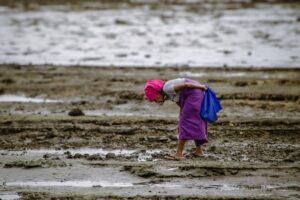
In the low tide, an i-Taukei fisherwoman gathers cockles along the Nasese sea wall in Fiji, a tradition weathered by time and tide. The assessment Climate Change Implications for Fisheries and Aquaculture in the Pacific Island Region looks at women’s contributions across fisheries and aquaculture systems, from harvesting to trade. Credit: Josh Kuilamu/SPC
By Sera Sefeti
SUVA, Fiji, May 4 2026 – For generations, Pacific people have understood the ocean not as a resource but as identity, sustenance, and survival. Today, that relationship is being tested in ways science is only just beginning to fully capture.
For the first time in the region’s history, every Pacific Island country now has a clear, data-driven picture of what climate change will mean for its waters and its own Exclusive Economic Zone (EEZ).
This shift marks more than just a scientific milestone. It is a turning point in how the Pacific can understand, manage, and defend its ocean in a rapidly changing climate.
From Regional Averages to National realities
The updated assessment, “Climate Change Implications for Fisheries and Aquaculture in the Pacific Island Region”, builds on a 14-year-old vulnerability study. But unlike its predecessor, this version moves beyond broad regional trends.
It goes deeper into country-specific realities.
In a region where ocean territories dwarf landmass, this matters. The Pacific controls around 27 million square kilometres of ocean, yet only about 2 percent of that is land. Fisheries are not just an industry – they are the backbone of economies, cultures, and food systems.
“This is quite amazing,” says SPC Climate Change Project Development Specialist Marie Lecomte, referring to the ability to assess climate impacts at the EEZ level. “The ocean is so big, and land masses are so tiny… it has always been very difficult to downscale ocean models to something meaningful for countries.”
Now, that gap is beginning to close.
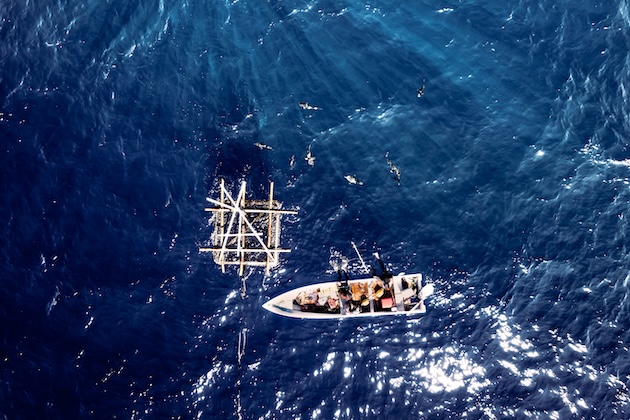
Rising ocean temperatures and changing chemistry are reshaping marine ecosystems, impacting people’s livelihoods and national economies. Credit: Douglas Picacha/IPS
Why This Science Matters Now
For Pacific leaders, the climate crisis is not abstract. It is negotiated in global forums, defended in policy rooms, and lived daily in coastal communities.
Yet one persistent challenge has been the lack of evidence.
This report begins to change that.
It provides:
- Updated scientific data on ocean conditions
- Country-level projections of fisheries decline
- A clearer understanding of how climate change cascades from ocean systems into economies and livelihoods
In doing so, it transforms science into something actionable:
- A diagnostic tool showing what lies ahead
- A planning guide for adaptation
- A negotiation tool for global advocacy
For a region often described as the moral voice of climate negotiations, this evidence adds weight to that voice.
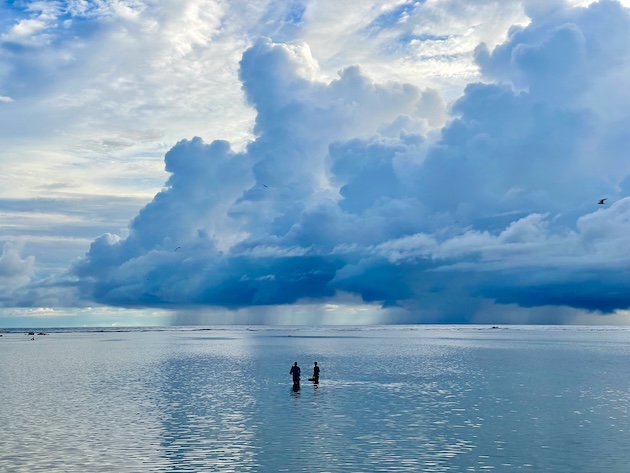
The Pacific controls around 27 million square kilometres of ocean, yet only about 2 percent of that is land. Now each country in the region will have a data-driven picture of the effects of climate change in its waters. Credit: Francisco Blaha/SPC
What the Science Reveals
The findings are sobering.
Rising ocean temperatures and changing chemistry are already reshaping marine ecosystems. The report maps, with unprecedented clarity, a chain reaction: warming waters alter fish biology, leading to fish stocks’ decline, which will ultimately result in the impact on people’s livelihoods and national economies.
At the centre of this crisis are coastal ecosystems, i.e. coral reefs, mangroves, and seagrass beds, the ecological foundations of Pacific fisheries.
These systems are under intense pressure from both climate change and human activity.
“For mangroves, they are also constrained by infrastructure development,” Lecomte explains. “If you build a new hotel, then you get rid of the mangrove.”
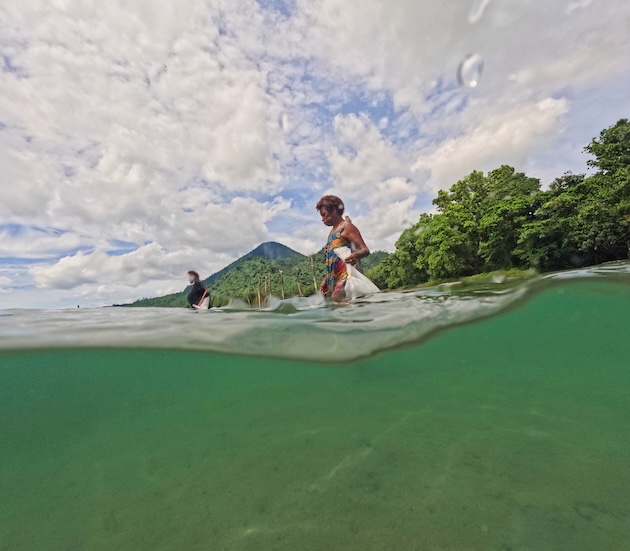
For scientists, the assessment Climate Change Implications for Fisheries and Aquaculture in the Pacific Island Region offers the most comprehensive dataset for policymakers and communities. Credit: John Nihahuasi/SPC
Across the Pacific, the risks are not evenly distributed.
Low-lying island nations, already facing sea-level rise and extreme weather, are doubly exposed. Their dependence on fisheries for food and income leaves little buffer against decline.
The consequences are stark:
- Reduced food security
- Declining incomes
- Increased vulnerability of coastal communities
Yet even in this “doom and gloom” narrative, the report resists fatalism. Instead, it offers a framework for adaptation and resilience.
However, in the Pacific, the situation is not starting from zero.
For centuries, communities have managed fisheries through customary practices like tabu areas, seasonal closures, and community governance.
The report reinforces these approaches while introducing new strategies:
- Climate-smart aquaculture
- Diversifying target species
- Improving value chains (earning more from less catch)
- Protecting and restoring coastal/blue ecosystems
It also highlights a critical but often overlooked dimension, which is women’s contributions across fisheries and aquaculture systems, from harvesting to trade work that remain under-recognised despite their central role.
Science, Power, and the Politics of Survival
Perhaps the most powerful implication of the report lies beyond science — in politics.
Despite being one of the most climate-impacted sectors, fisheries are largely absent from global climate negotiations.
This is where the findings become more than a report. It becomes leverage.
With pre-COP discussions and COP31 on the horizon, Pacific countries now have something they have long needed.
“If Pacific delegations can come to pre-COP saying we have the latest science… and we all agree on how we want to act with the regional climate change strategy for coastal fisheries being pre-endorsed,” Lecomte says, “it’s a unique chance to showcase fisheries as part of the ocean–climate nexus.”
Beyond the Data: A Call to Act
This report does not just document change but also demands a response.
It bridges worlds:
- Between science and storytelling
- Between policy and lived experience
- Between global negotiations and village shorelines
For scientists, it offers the most comprehensive dataset yet when it comes to the Pacific and its EEZ; for policymakers, it is a roadmap; for communities, it is a validation of what they already know.
That the ocean is changing and so must we.
But in that change lies something powerful. For the first time, the Pacific is not just speaking from experience. It is speaking with scientific evidence.
IPS UN Bureau Report
!function(d,s,id){var js,fjs=d.getElementsByTagName(s)[0],p=/^http:/.test(d.location)?’http’:’https’;if(!d.getElementById(id)){js=d.createElement(s);js.id=id;js.src=p+’://platform.twitter.com/widgets.js’;fjs.parentNode.insertBefore(js,fjs);}}(document, ‘script’, ‘twitter-wjs’);